

Why stress, pain, and healing are more connected than you think
“Why am I doing everything right… and still not recovering?”
You’re exercising.
You’re stretching.
You’re being careful.
Your scans are reassuring and your diagnosis makes sense, yet your recovery feels slow, unpredictable, or stuck.
This is one of the most common frustrations I hear in practice. And in many cases, it isn’t because the treatment plan is wrong or because your body is failing to heal; it’s because we’re not addressing a critical piece of the recovery process: the nervous system.

Recovery Is Not Just a Tissue Problem
When we talk about recovery, we usually focus on structural tissues like muscles, joints, discs, and tendons. These structures matter, but tissue integrity is only one piece of the puzzle.
The truth is, tissues don’t heal in a vacuum, they heal inside a living system that controls:
- muscle tone
- blood flow
- inflammation
- sleep and energy
- how safe or threatening movement feels
That system is your nervous system, and your recovery depends not just on what you do, but on the state your body is in while you’re doing it.
The Nervous System Sets the Conditions for Healing
Your nervous system is often thought of as a complex communication network involved in pain processing, movement coordination, and information sharing. One of its most important roles, however, is regulation.
The autonomic nervous system constantly adjusts:
- how tense or relaxed muscles are
- how much blood reaches tissues
- how sensitive pain processing becomes
- how efficiently repair and recovery processes occur
This happens automatically, without conscious effort.
In simple terms, it’s your nervous system that sets the conditions under which healing is allowed to happen.
Stress Is a Body State, Not Just a Feeling
When people hear the word stress, they often think of emotional pressure or anxiety, but biologically, stress is much broader than that.
To the nervous system, stress includes:
- ongoing pain
- poor or disrupted sleep
- injury or illness
- repeated pain flare-ups
- high cognitive load
- time pressure and high lifestyle demands
The body doesn’t neatly separate stressors into physical and psychological categories. The nervous system responds to the total load of stressors on the body at any given time. If that load stays high for long enough, the nervous system shifts into a more protective state. This state is often referred to as “Fight or flight.”

What Happens When the System Stays on High Alert
A nervous system in protection mode isn’t broken, it’s doing its job; but staying there too long has consequences.
Common effects include:
- increased muscle guarding and stiffness
- reduced blood flow to certain tissues
- heightened pain sensitivity
- slower or more inconsistent recovery
Importantly, this isn’t about being “stuck in fight-or-flight.” It’s about reduced flexibility withing the system to shift smoothly between effort and recovery. When that adaptability is lost, even reasonable loads can feel excessive.
The Stress–Pain Feedback Loop
Pain itself is a powerful stressor.
Pain increases threat detection and increased threat detection amplifies pain sensitivity.
This feedback loop explains why:
- pain can persist after tissues have healed
- flare-ups can feel disproportionate to activity
- symptoms can change day to day without a clear cause
Pain is not a direct measure of damage. It’s influenced by how safe or threatened the nervous system perceives the situation to be at any given time.
Why This Matters for Movement and Rehab
Movement is never just mechanical. Before your muscles contract, your nervous system is asking: “Is this safe? Is this predictable? Can I allow this load?“
If the system is on high alert:
- movement can feel heavy or effortful
- coordination may be less efficient
- fatigue sets in earlier
- pain may appear sooner than expected
This is why forcing strength or “pushing through” doesn’t always work, and why graded, predictable movement is so effective. It gives the nervous system evidence that movement is safe again.
Recovery Requires Nervous System Regulation
True recovery isn’t about doing nothing and it’s not about pushing harder.
It’s about restoring the nervous system’s ability to:
- downshift when appropriate
- tolerate load without overreacting
- adapt instead of amplifying threat
This is why effective care often combines:
- appropriately dosed movement
- manual therapy as meaningful sensory input
- breathing that supports regulation
- education that reduces uncertainty
These aren’t separate tools. They’re signals of safety delivered through different pathways.
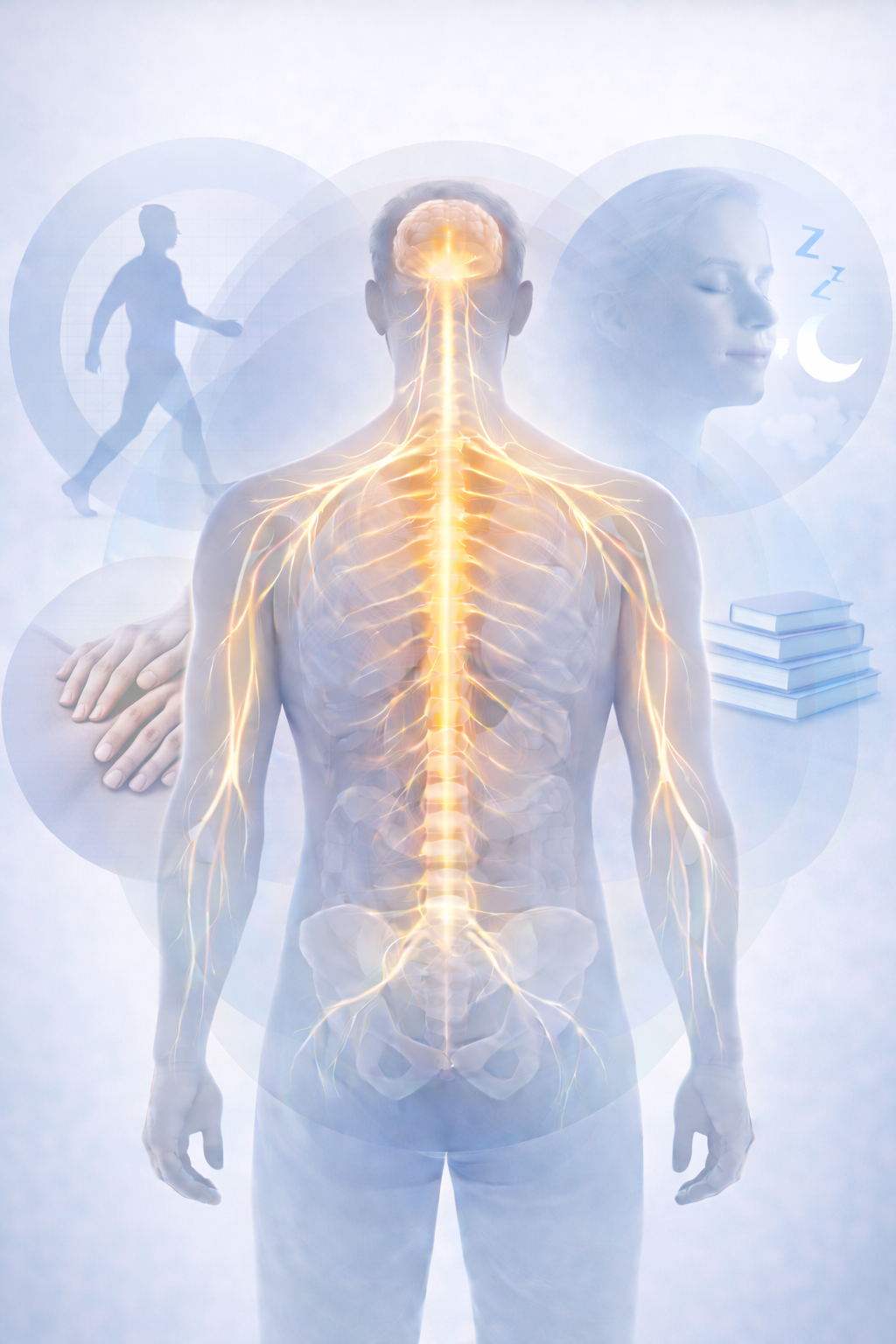
The Take-Home Message
If your recovery isn’t progressing as expected, it doesn’t mean you’re weak, broken, or failing rehab. Rather, it may mean your nervous system has been operating in protection mode for too long.
Muscles, joints, and tissues don’t decide when to heal.
The nervous system does.
Recovery doesn’t happen because you force it.
It happens when the system allows it.
Understanding your pain and recovery is a powerful part of the process. If you’d like help making sense of your symptoms and exploring how your nervous system may be shaping them you can use the online portal to book a consultation and get the conversation started.
Move Well. Live Well.